Skip to Main Content

How to Layer Area Rugs on Carpet in Prescott (2027 Guide)

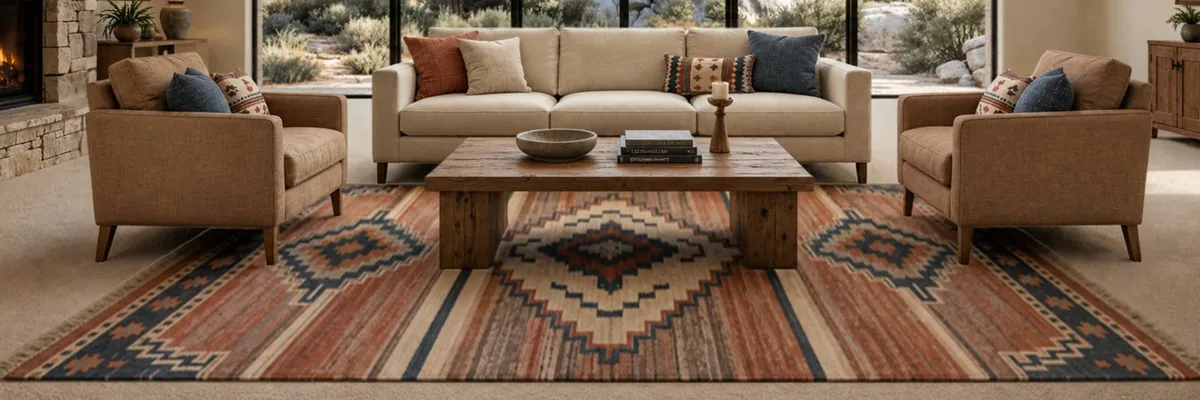
Neutral carpet with a Southwest-pattern area rug layered under a coffee table in a Prescott living room

This guide shows you how to layer area rugs on carpet, so you can add color, warmth, and style to a room without replacing your floor.

A rug over carpet might sound like too much of a good thing. Done right, it ties a room together, defines a seating area, and gives you a fresh look every season.

We'll cover why layering works so well in Prescott homes, what to check before you buy, a simple step-by-step method, and how to pick the right rug. The Barrett Floors team has helped homeowners across Yavapai County with their floors since 2014.

Want to see rugs and carpet side by side? Stop by our showroom or contact our team.
Why Layer Area Rugs on Carpet in a Prescott Home?

An area rug on carpet adds warmth, color, and texture, and it lets you change your style without touching the floor underneath. In our part of Arizona, it also just makes sense for the way we live.

Prescott sits at a mile-high elevation and gets more than 300 days of sunshine a year, according to the Arizona Commerce Authority. That means chilly winter nights and lots of bright sun pouring through big windows.

A second layer underfoot keeps bedrooms and family rooms cozier from November through March. And since rugs are easy to swap, you can roll out something lighter for summer and bring back a warm wool rug when the first snow dusts Thumb Butte.

Here's what layering rugs over carpet can do for your room:

  • Add extra warmth and softness underfoot
  • Bring in color and pattern when your carpet is a neutral shade
  • Define a seating area in an open living room or den
  • Take the wear in busy traffic paths so your carpet lasts longer
  • Cut down on echo in rooms with high, vaulted ceilings
  • Let you change your style each season without a remodel

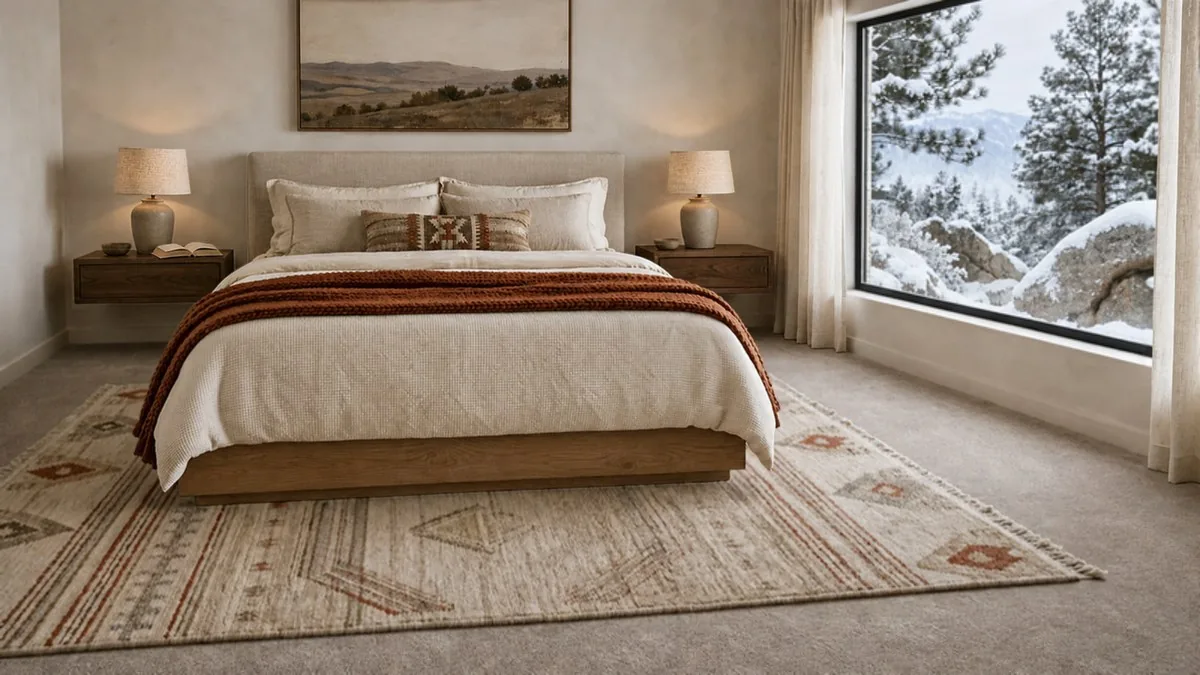
Bedroom with light gray carpet and a large terracotta and ivory area rug layered under the bed

What Should You Check Before You Layer a Rug Over Carpet?

Not every rug works on every carpet, and the right pairing comes down to a few details. Here are four things we recommend checking first:

1. Carpet Pile Height

Low-pile and Berber carpets make the best base for layering rugs, because the rug sits flat and stays put. Thick, plush, or shag carpet is a different story. A rug on top can shift and bunch up, which turns it into a trip hazard, so very deep carpet is often better left on its own.

2. Color Contrast

Most wall-to-wall carpet is neutral, like beige, gray, or cream. That makes your area rug the perfect place to bring in an accent color. If your carpet is light, go darker or bolder with the rug, and if your carpet is a rich color, a lighter rug brings balance.

3. Pattern

A solid carpet pairs well with a patterned rug, which gives the room a focal point. If your carpet already has a pattern, choose a solid or very simple rug so the two don't compete. Southwest and geometric patterns look right at home in a lot of Prescott living rooms.

4. Texture

Texture keeps a layered floor from looking flat. On short-pile or looped carpet, a thicker rug adds a soft, rich feel. On plush carpet, a flat-woven or low-pile rug creates contrast and lies flatter.

Should You Add a Rug or Replace the Carpet?

If your carpet is clean, flat, and in good shape, a rug is a quick and affordable way to freshen up the room. If the carpet is worn, stained, or rippled, a rug will only hide the problem for a little while.

A rug usually makes sense when:

  • Your carpet is in good shape but feels a little plain
  • You want to define a seating or dining area
  • You'd like to change your look with the seasons
  • You plan to update the floor later and want a quick refresh now

New carpet installation usually makes sense when:

  • The carpet has ripples, matted traffic paths, or permanent stains
  • It's older and has lost its bounce and color
  • You notice odors that cleaning won't fix
  • You're already planning a bigger remodel

Not sure which side you're on? A quick in-home look usually answers that question in a few minutes.

How to Layer Area Rugs on Carpet: 5 Steps That Work

Once you've picked a rug that suits your carpet, getting it to look right is all about size, grip, and placement. Here are the five steps we walk our customers through:

1. Measure the Room and Mark It Out

Measure your seating area or bed zone, then outline the rug on the carpet with painter's tape. Live with the outline for a day or two to make sure it feels right. These sizes work in most rooms:

  • Living room: 8x10 or 9x12, with at least the front legs of every seat on the rug
  • Dining room: about 24 inches past the table on every side, so chairs stay on the rug when you pull them out
  • Bedroom: 8x10 under a queen bed or 9x12 under a king, starting just below the nightstands
  • Hallway: a runner that leaves about 4 to 6 inches of carpet showing on each side

2. Add a Rug-to-Carpet Pad

Most rug pads are made for hard floors, so they won't grip carpet. Look for a pad made for rugs on carpet instead. It keeps the rug from creeping across the room and adds a little extra cushion.

3. Anchor It With Furniture

Set the front legs of sofas and chairs on the rug, or place the bed right on top of it. Furniture weight is the best way to keep a rug in place. A rug that floats on its own in the middle of the room tends to drift.

4. Secure the Edges and Corners

Make sure corners lie flat and edges don't curl. The CDC's home fall prevention checklist for older adults suggests double-sided tape or a non-slip backing so rugs won't slip. On carpet, rug grippers made for carpet do the same job without leaving residue behind.

5. Rotate and Clean It Often

Turn your rug every six months so it wears evenly and fades evenly in our strong Arizona sun. Vacuum both the rug and the carpet under it, and lift the rug now and then to let the carpet breathe.

In our experience, step two is the one most people skip. It's also the reason most rugs end up crooked by the end of the week.

When Should You Call an Expert for Help With Rugs and Carpet?

Call an expert when your carpet ripples, your rug won't stay put, or you want a custom size. Those are the jobs where the right tools make a big difference.

Loose, wavy carpet makes it almost impossible to layer a rug. Our team can restretch it so it lies tight and flat again. If it's time for something new, we handle carpet installation start to finish with our own in-house crew, so there are no subcontractors and no surprises.

You can schedule a free in-home measure and get a free estimate with no pressure to buy. Want help pulling a room together? Book a free design consultation with our team.

Found original hardwood under your old carpet? Our hardwood restoration service can bring it back to life. You can see everything we do on our flooring services page, including retail services for homeowners, builder services for new homes, and commercial services for offices and shops across Northern Arizona.

We're a family-owned business with deep roots in Prescott, and you can read more about us. Local readers voted us Best Flooring in Prescott in The Daily Courier's 2019 Readers' Choice Awards, and you can see what customers say on our reviews page.

Barrett floors team

Frequently Asked Questions About Layering Rugs on Carpet

Most ready-made 8x10 area rugs run about $250 to $1,500, depending on the fiber and how they're made. A custom rug cut from carpet usually costs $3 to $10 per square foot, plus $2 to $6 per linear foot for binding. A good rug-to-carpet pad adds roughly $30 to $100.

We carry trusted names like Shaw Floors, Stanton, Masland, Mannington, COREtec, Anderson Hardwood, Engineered Floors, and Cali Floors, plus tile from Daltile and Arizona Tile. Stanton and Masland are both known for beautiful carpets and rugs. You can see the full list on our brands page. Bring in a carpet sample, and we'll help you find a rug that matches.

Not if you choose it and care for it well. Skip rugs with rubber or latex backing that can stick to carpet fibers, and pick colorfast rugs so the dyes won't bleed. Rotate the rug and lift it now and then so the carpet can breathe. Vacuum both often to keep dirt from grinding in.

We don't recommend it, because a runner on top of carpeted stairs is hard to secure and can slip underfoot. If your stairs need a refresh, new stair carpet or a properly installed runner over hard treads is the safer choice. Here's our take on the best carpeting for stairs.

Need Help Layering Area Rugs on Carpet in Prescott?

Want a second opinion before you buy? The Barrett Floors team can help you pick the right rug, pad, and size, or create a custom area rug that fits your room perfectly.

  • Visit us: 491 E Z St, Prescott, AZ 86301
  • Call us: (928) 227-3278
  • Hours: Monday to Thursday, 8 a.m. to 5 p.m., and Friday, 8 a.m. to 4 p.m. Showroom visits are by appointment, and Saturday appointments are available.
  • Service area: Prescott, Prescott Valley, Chino Valley, and communities across Yavapai County and Northern Arizona

Ready to refresh your room? Contact us to book your visit.

Barrett floors team

About the Author

Christopher Barrett has more than 25 years of experience in the flooring industry. Born in Prescott and raised in Chino Valley, Arizona, Christopher has worked as an installer and a floor sales consultant, and he is now the proud owner of Barrett Floors.

Barrett Floors is a family-owned and operated company with long-running ties to the community. Christopher supports a wide variety of organizations, such as Big Brothers Big Sisters, Yavapai 4-H, and Little League. Barrett Floors is happy to help with all your flooring, bathroom design, and countertop needs.

About Us